OEM/ODM
OEM vs ODM: Manufacturing Path for Your Wellness Brand
OEM (Original Equipment Manufacturing) means the buyer defines the product design and commissions factory production — giving full IP ownership and product exclusivity but requiring tooling investment and 12–20 weeks to market. ODM (Original Design Manufacturing) means selecting from proven factory platforms with logo, color, and packaging customization — faster (4–8 weeks), lower MOQ, no tooling cost. Most wellness brands start ODM to validate demand, then move into OEM once volume justifies the investment.
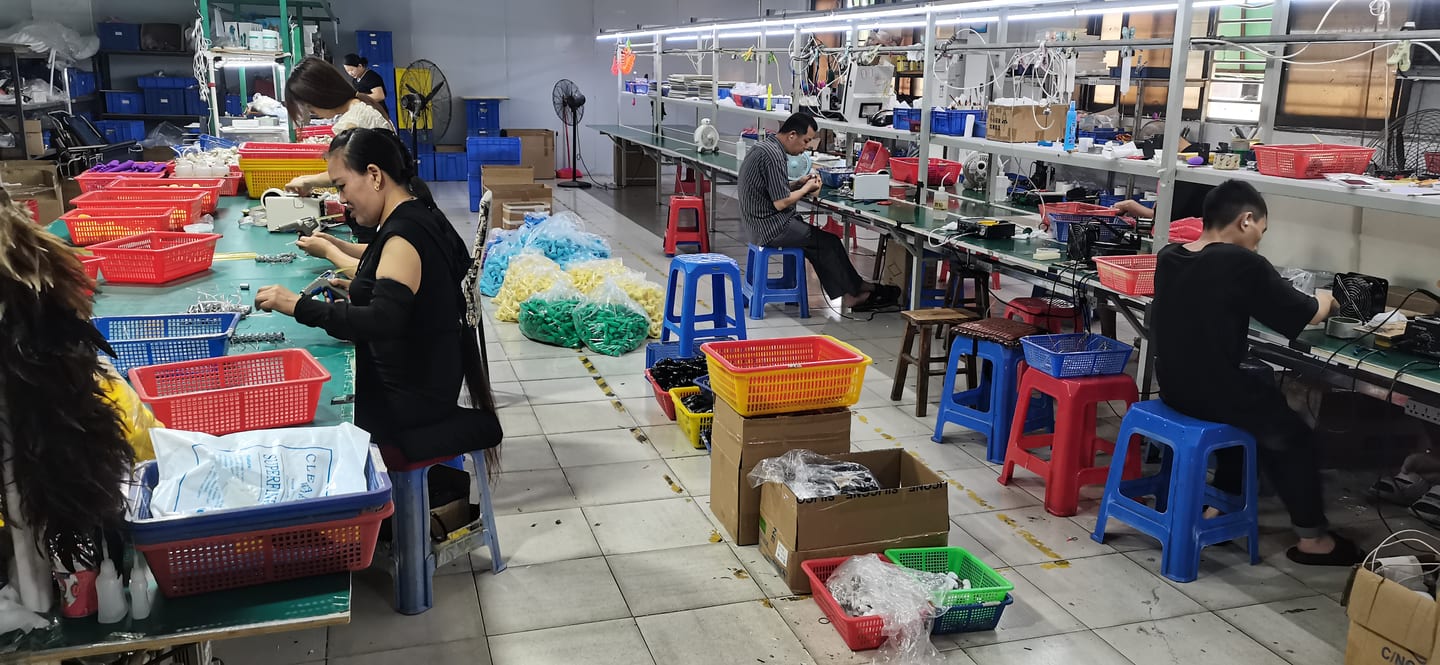
When a B2B buyer asks a manufacturer "can you make my product?", the answer depends entirely on which model they're using. OEM (Original Equipment Manufacturing) means the buyer defines the product — shape, function, materials, internal structure — and the factory builds to that specification. ODM (Original Design Manufacturing) means the factory has already developed the product and the buyer customizes the brand-facing elements: logo, color, packaging, and manual.
The difference isn't just terminology. It affects your timeline by weeks or months, your upfront investment by thousands of dollars, your IP position, and how quickly your brand can respond to market demand. This guide explains both models precisely, compares them across seven measurable dimensions, and gives you three questions to determine which path fits your brand right now.
What Is ODM?
ODM stands for Original Design Manufacturing — the model described in the Wikipedia entry "Original design manufacturer". The factory has already engineered the product — motor specifications, battery capacity, charging system, waterproof structure, function modes, and internal layout are pre-developed and production-tested. You select from available platforms, then apply your brand to the customizable surface layer: logo placement and method (deboss, print, or label), body color, silicone finish, packaging structure, user manual content, insert card, and carton marks.
Because the base product already exists and carries production history, ODM is significantly faster. Initial samples typically arrive within 7–10 days. Minimum order quantities are lower because there are no tooling costs to recover across the run. First bulk shipment from a confirmed brief is realistic within 4–8 weeks.
The trade-off is that the product shape and core engineering are shared with other buyers using the same platform. Your competitive advantage in ODM comes from brand execution — packaging design, content quality, customer experience — not from exclusive hardware.
ODM is the right starting point for: brands entering a new product category, distributors building a private label portfolio, startups validating demand before deeper investment, and any buyer who needs goods shipping within 8 weeks.
VOVOHO ODM workflow: Select product platform → Confirm color, logo, and customization scope → Submit vector artwork → Approve physical sample → Confirm bulk production → Export packing and shipment.
What Is OEM?
OEM stands for Original Equipment Manufacturing — see the Wikipedia entry "Original equipment manufacturer". The buyer owns the product concept — you define the shape, dimensions, ergonomics, internal layout, material specifications, function requirements, and any proprietary features. The factory engineers and manufactures according to your specification. This typically requires custom mold development to produce the unique product shape.
OEM gives the brand full IP ownership of the product design. No other buyer can source the same product from the factory. This creates genuine product differentiation at the hardware level — a shape, function combination, or feature set that competitors cannot directly replicate by placing an order with the same manufacturer. The strategic value here is not merely "different" but meaningfully different: differentiation that survives copying has to rest on a product proposition competitors cannot articulate, not just on a shape they cannot tool [Verganti, 2009].
OEM requires more from both sides: a detailed product brief before work begins, tooling investment (typically $2,000–$20,000 depending on product complexity and number of mold components), a longer development timeline (12–20 weeks from brief to first bulk shipment), and disciplined communication across design review, engineering confirmation, sample approval, and production sign-off stages. Realistic mold budgets are covered in our custom mold costs and timelines guide.
OEM is the right path for: established brands scaling a confirmed bestseller, companies where product shape or function is central to brand identity, buyers with proven demand who need a product competitors cannot duplicate, and projects where packaging differentiation alone is not enough.
VOVOHO OEM workflow: Product brief → Feasibility review → Engineering and DFM → Mold quotation → Tooling → Trial samples → Functional testing → Cosmetic review → Pilot batch → Mass production approval → Export packing and shipment.
Why DFM Decides Your OEM Tooling Cost
DFM — design for manufacturability — is the review that reconciles design intent with what the tool and the process can actually produce repeatably. It is where draft angles, wall-thickness uniformity, gate placement, parting lines, demolding direction, and shrink compensation are settled. For a silicone-bodied product this is not optional detail: an undercut that looks fine on a render becomes a multi-part mold with a hand-loaded insert, and a non-uniform wall becomes a sink mark or a tear point at the thin section.
The commercial consequence is large. Two superficially similar products can differ by five times in tooling cost purely because one was designed with DFM in mind and one was not — and the DFM-aware version usually also has a lower defect rate, which compounds across every production run. DFM is a well-established design discipline precisely because the majority of manufacturing cost is committed at the design stage, before any tool is cut [Wikipedia, 2024].
Ask for the DFM report before approving the tooling quotation. A factory that cannot produce a written DFM report with specific recommendations — draft angles, wall thickness, parting line, gate location — is quoting a shape, not a manufacturable part. The report should also state which features it recommends changing and what each change does to tool cost and cycle time.
The corollary matters for buyers comparing quotations: the cheapest tooling quote is frequently the one that skipped DFM, and the cost reappears as multi-part molds, secondary operations, higher defect rates, and slower cycles. For how that shows up in real numbers, see our custom mold costs and timelines guide — and once the mold exists, the question becomes who owns it: tooling ownership and IP protection in China sets out the clauses that decide your leverage for years.
If you have already decided that OEM is the right path, the next constraint is schedule rather than choice — see the 90-day launch roadmap for how development, sampling, and certification overlap in practice.
How Do OEM and ODM Compare Across Key Metrics?
| OEM | ODM | |
|---|---|---|
| Time to first sample | 14–21 days | 7–10 days |
| Minimum order quantity | 500–1,000+ units | 100–500 units |
| Tooling / mold cost | Required ($2,000–$20,000+) | No tooling cost |
| Customization depth | Full — shape, function, everything | Logo, color, packaging only |
| IP ownership | Buyer owns the design | Shared or factory-owned |
| Time to market | 12–20 weeks | 4–8 weeks |
| Best for | Scaling established brands | First launch, market testing |
The tooling line in that table is where the decision is actually made, and it can be reduced to one division: tooling investment divided by the per-unit saving OEM delivers over ODM equals the number of units that repay the mould. At a USD 6,000 tooling spend, a USD 2 saving per unit needs 3,000 units to break even, while a USD 8 saving needs only 750. This is the arithmetic behind every sensible OEM decision — not whether custom tooling is better, but whether your order volume is large enough for the fixed cost to disappear into the unit price.
Where Each Model Sits on Investment and Exclusivity
The seven dimensions in the table above collapse into two that actually drive the decision: how much capital you commit before the first unit ships, and how defensible the product is once it does. Plotting the three manufacturing models on those two axes makes the trade-off visible — there is no model that sits in the high-exclusivity, low-investment corner, which is exactly why brands that want both end up paying for tooling.
This is also the pattern the manufacturing literature describes: dedicated tooling is a fixed cost that only becomes rational once volume is high enough to spread it, which is why mass production concentrated in dedicated plants outperformed craft production on both cost and consistency once demand justified the capital [Womack, Jones & Roos, 1990]. At low volume the same fixed cost simply does not amortise, and off-the-shelf platforms win. The strategic question is not which model is better but where on the volume curve your product currently sits.
How to Choose: 3 Decision Questions
Answer these three questions in order — they resolve most OEM vs ODM debates in under five minutes. A longer scoring framework is available in our OEM vs ODM decision framework for brand owners.
Do you have confirmed market demand?
Still testing whether customers want this category: start with ODM. You'll spend 3–5× less upfront and get to market 2–3× faster. Have proof of demand (sales data, waitlists, distributor commitments): OEM may be worth the investment to lock in an exclusive product.
What is your realistic timeline?
Need to ship within 8 weeks: ODM is the only path. Have 4+ months for development, sampling, and approval: OEM is feasible. Most OEM projects with custom molds take 12–20 weeks from brief approval to first bulk shipment.
Does exclusivity matter to your brand?
Differentiation built on packaging, content, and experience: ODM with strong private label execution is enough. Brand story requires a unique shape or feature only you can sell: OEM. Many brands launch on ODM, validate demand, then transition the top seller into OEM.
What Are the Common Misconceptions About OEM and ODM?
- Misconception 1: "OEM means better quality, ODM means cheaper"
Quality is a function of factory capability and production controls — not the manufacturing model. A well-established ODM platform often has more rigorous QC history than a new custom OEM design because the base product has been through more production cycles. The right question is whether this factory has repeatable quality at your required standard, regardless of model. For how white label fits into the same picture, see the OEM, ODM and white label comparison.
- Misconception 2: "With ODM, you don't own your brand"
Your brand, trademark, packaging design, marketing content, and customer relationships are entirely yours in both models. What you don't own in ODM is the product's internal engineering and shape. If brand identity comes from excellent packaging and customer experience — which is true for most wellness brands — ODM IP limits don't affect your competitive position.
- Misconception 3: "OEM always requires very high MOQ"
Tooling cost is a one-time upfront investment, not a per-order cost. Once the mold exists, per-order MOQ for OEM can be comparable to ODM production runs. The entry barrier is the tooling investment and development timeline — not necessarily the ongoing production quantity per order.
Who Owns the Mold? Tooling Ownership, NNN and the First-to-File Rule
The single most expensive misunderstanding in OEM is the assumption that paying for tooling transfers ownership. It does not. According to the Wikipedia entry "Original equipment manufacturer", the buyer specifies the product, while the Wikipedia entry "Original design manufacturer" describes the opposite case where the platform belongs to the factory. In OEM the mold physically stays with the factory because that is where it is used. Ownership only separates from possession if a contract says so. Asset-specific investments create bilateral dependence after the money is spent, so the governance has to be settled before the investment, while both parties still have a real alternative [Williamson, 1975]; the same boundary question sits at the heart of why firms exist at all [Coase, 1937].
Three clauses do most of the work. First, a tooling ownership clause naming your brand as sole owner from the first payment, prohibiting use for third parties, requiring engraved identification on the mold, defining custody and setting a release deadline with a penalty. Second, an NNN agreement — non-use, non-disclosure, non-circumvention — because a conventional Western NDA covers disclosure but usually not use, circumvention or transfer to an affiliate. Third, an express IP assignment covering 2D and 3D drawings, native CAD files, firmware, packaging artwork and manuals, surviving termination and flowing down to sub-suppliers; the Wikipedia entry "Supply chain" is a useful reminder that mold makers, compounders and electronics vendors all receive drawings too.
Register the design before disclosure: China applies a first-to-file rule, so an earlier trade show, distributor sample or product photograph can destroy novelty. A 50/50 tooling payment tied to first-article inspection approval keeps leverage until the mold is proven, and naming a second mold maker in the contract makes transfer physically possible. As Competitive Advantage argues, a defensible position comes from an activity system competitors cannot cheaply imitate — a shape anyone can copy in a week is not differentiation [Porter, 1985]. For the full eight-point contractual checklist, see the tooling ownership and IP protection guide; for the stage at which tooling becomes worth funding, see the 90-day launch plan and the full four-model comparison. Verify the arrangement on the factory floor before the first tooling payment.
References
- Verganti, R. Design-Driven Innovation: Changing the Rules of Competition by Radically Innovating What Things Mean. Harvard Business Press, 2009.
- Womack, J. P., Jones, D. T., & Roos, D. The Machine That Changed the World: The Story of Lean Production. Rawson Associates, 1990.
- Wikipedia. "Original design manufacturer." https://en.wikipedia.org/wiki/Original_design_manufacturer
- Wikipedia. "Original equipment manufacturer." https://en.wikipedia.org/wiki/Original_equipment_manufacturer
- Wikipedia. "Design for manufacturability." https://en.wikipedia.org/wiki/Design_for_manufacturability
- Williamson, O. E. Markets and Hierarchies: Analysis and Antitrust Implications. Free Press, 1975.
- Coase, R. H. The Nature of the Firm. Economica, 1937.
- Porter, M. E. Competitive Advantage: Creating and Sustaining Superior Performance. Free Press, 1985.
Frequently Asked Questions
Can I move from ODM to OEM later without losing my market position?
Yes, and it is the standard path. The mechanics are straightforward: keep selling the ODM platform while the OEM development runs in parallel, then switch the SKU over at the point the OEM unit reaches cost and quality parity. Two things make the transition clean — hold the same core specification (dimensions, function set, charging standard) so customer expectations do not shift, and keep the packaging artwork modular so only the die-line changes. The risk to avoid is a gap in stock: OEM tooling plus three sample rounds plus certification runs 16–24 weeks, so start development while you still have 4–6 months of ODM inventory cover.
Is OEM worth it for a single SKU?
It can be, if that SKU is your profit centre. The economics work when the tooling cost is small relative to the gross margin the exclusivity protects over the payback period. A $6,000 mold amortised across 12 months of sales at 500 units per month is $1 per unit — trivial. The same mold on a SKU selling 40 units a month is $12.50 per unit and never pays back. The test is not order size, it is whether the product is defensible enough that a competitor copying it would take meaningful revenue from you.
What happens to my tooling if the relationship with the factory ends?
Only what your manufacturing agreement says. In the absence of an explicit clause, a factory can treat molds it built as its own property or as security against outstanding balances. The clause needs four elements: a declaration that the tooling is your property with a stated value, a storage and maintenance obligation including who pays for refurbishment after the agreed shot count, a transfer procedure naming notice period and shipping responsibility, and the right to have a third party inspect the tooling on request. Photograph each mold with an identification plate at handover — that photo is the evidence that the tool exists and is yours.
Does choosing ODM stop me from selling on Amazon or Shopify?
No. Neither platform requires product exclusivity, and a large share of adult wellness listings are ODM platforms with different branding. What ODM does create is listing competition: if several sellers use the same platform, Amazon may merge the listings or suppress duplicates, and your reviews can end up attached to a competitor's variation. Mitigate with channel or marketplace exclusivity negotiated with the factory, distinct colorways, and differentiated bundle or packaging configurations that make the ASIN genuinely distinct rather than a rebadge.
What does an OEM project actually cost before the first shipment?
Budget five lines, not one: tooling ($2,000–$20,000+ depending on part count and complexity), sample rounds (typically $300–$1,000 total across three rounds, often credited against the bulk order), certification testing ($1,500–$6,000 for CE plus FCC plus UN38.3 depending on wireless content), packaging tooling (die-line and plate charges, $300–$1,500), and the bulk order deposit. Buyers who budget only tooling and unit price are usually surprised by the certification and packaging lines, which together can exceed the mold cost on a simple product.
Do I need a design patent for an OEM product?
A design patent is not required to manufacture, but it is the only mechanism that converts your tooling investment into an enforceable right. Without one, a competitor can legally produce a similar-looking product from a different factory as long as it does not copy protected elements. File in the markets where you actually sell — China, the EU, and the US have separate systems and separate costs — and file before the product is publicly disclosed, because most jurisdictions require novelty at filing. For most brands the practical sequence is: launch, confirm the SKU sells, then file.
Can a factory refuse to take on my OEM project?
Frequently, yes — and a refusal is useful information. Factories decline OEM work when the brief is under-specified, when the requested volume cannot absorb the tooling amortisation, when the design requires processes they do not run in-house, or when the product's compliance profile adds risk they cannot document. A factory that accepts every brief without a DFM review is not evaluating your project; it is quoting to keep the conversation open. Ask what they would change about the design before quoting — the quality of that answer tells you more than the price.
What is DFM and why does it decide my tooling cost?
DFM — design for manufacturing — is the review that reconciles your design intent with what the tooling and process can actually produce repeatably. It is where draft angles, wall thickness uniformity, gate placement, parting lines, and demolding are settled. A design that ignores DFM still gets built, but it gets built with multi-part molds, secondary operations, and a high defect rate — which is why two superficially similar products can differ by 5× in tooling cost. Ask for the DFM report in writing before approving the tooling quotation; a factory that cannot produce one is quoting a shape, not a manufacturable part.
If I pay for the mold, do I own it?
Not automatically. Paying finances the tooling; ownership only separates from physical possession through an express contract clause. Without it, the factory keeps the mold on its own asset register and can run it for other clients. Require a clause naming your brand as sole owner from the first payment, banning third-party use, mandating engraved identification, defining custody and setting a release deadline with a penalty for delay. Name a second mold maker in the same agreement so the clause is actually executable.
Is a standard NDA enough for an OEM project in China?
No. A conventional Western NDA covers disclosure of confidential information but typically does not prohibit the supplier from using your design, circumventing you to sell directly to your customers, or passing the project to an affiliate. Sourcing practice in China uses an NNN agreement — non-use, non-disclosure, non-circumvention — drafted to be enforceable in the jurisdiction where the tooling physically sits, with governing law, language and a pre-agreed liquidated penalty.
When should I register a design patent for an OEM product?
Before any disclosure. China follows a first-to-file rule for design patents, so the first party to file holds priority even against the original author of the design. File before trade shows, before shipping samples to distributors and before publishing product photography; an earlier public disclosure can destroy the novelty requirement. Register in your destination markets as well, and keep the assignment clause covering CAD files, firmware and packaging artwork.
Not sure which path fits your project? Share your product goals, target market, and timeline with our sales team. We'll tell you honestly which model fits — and why.